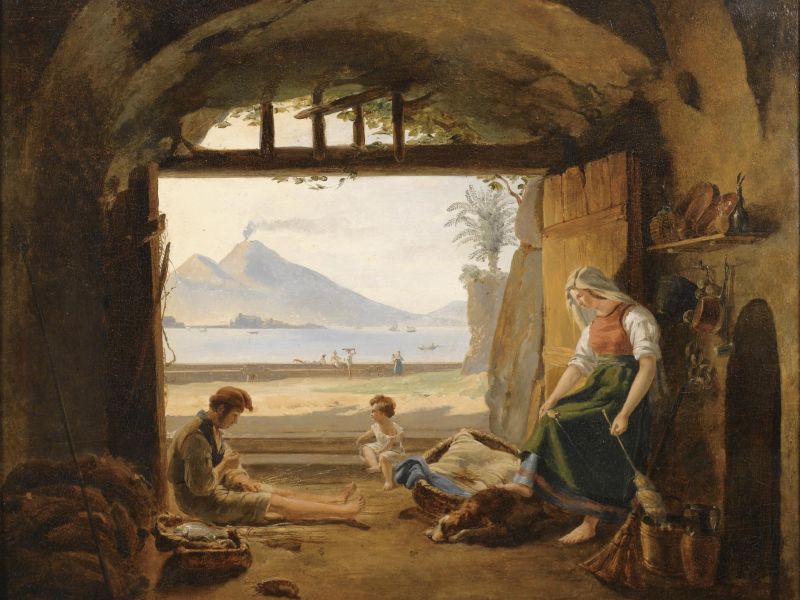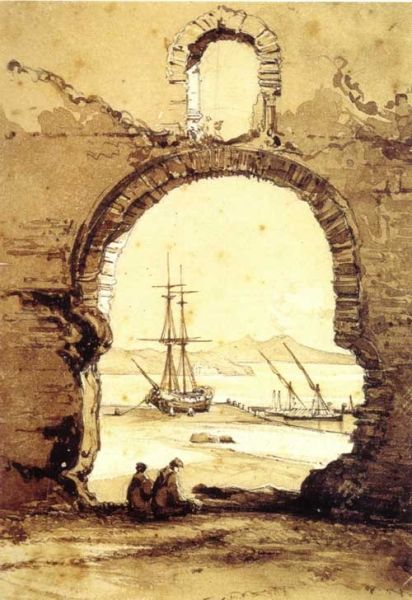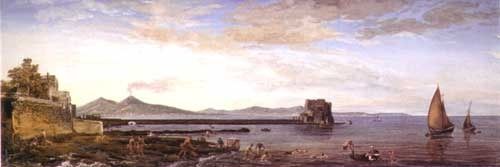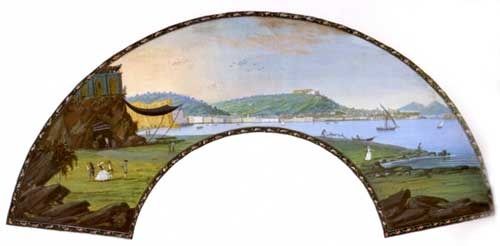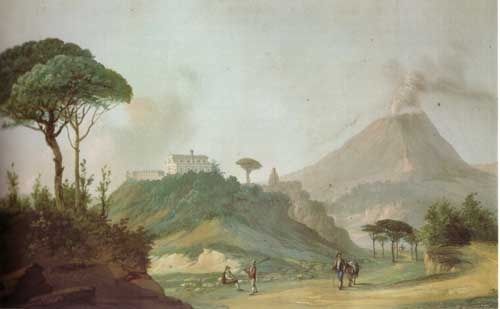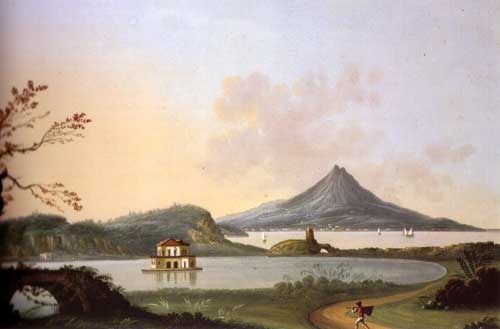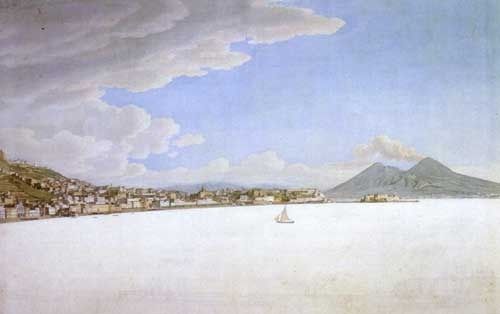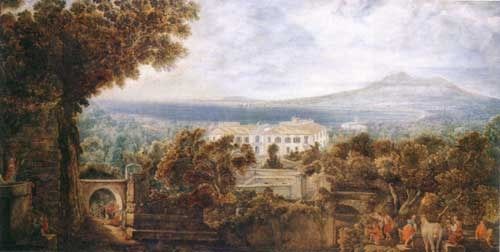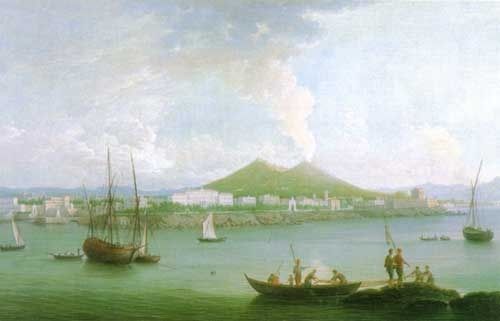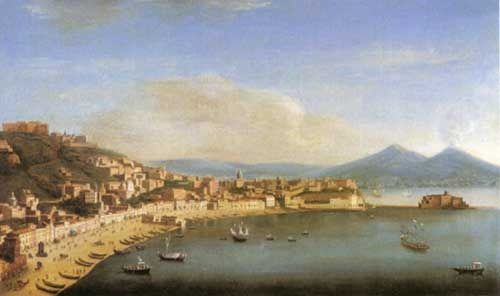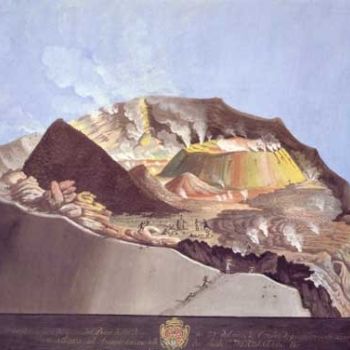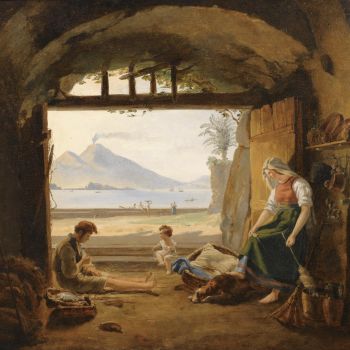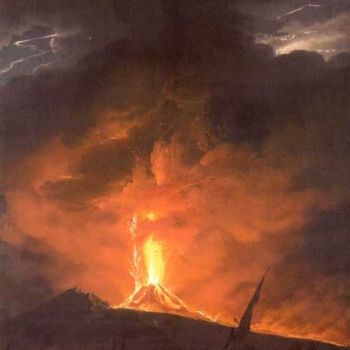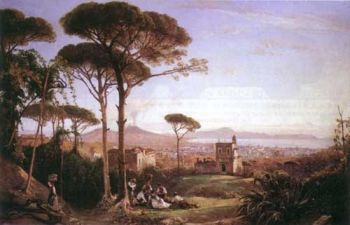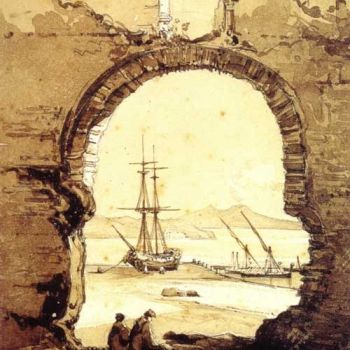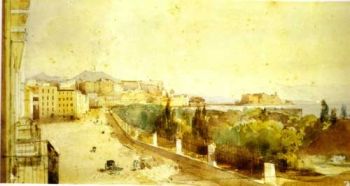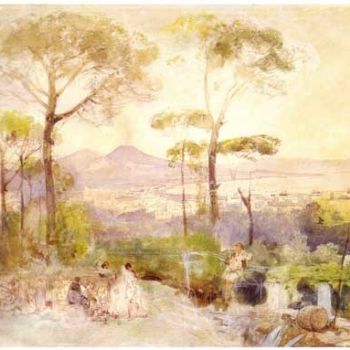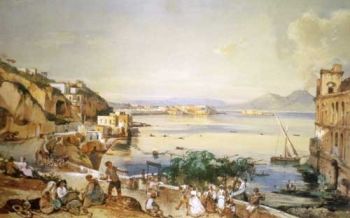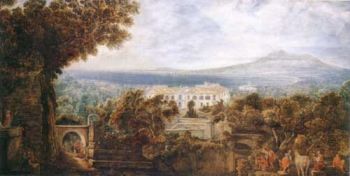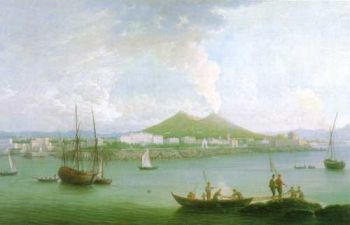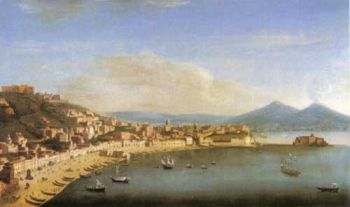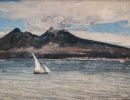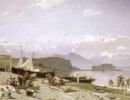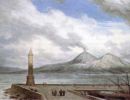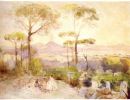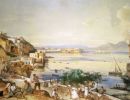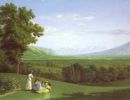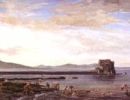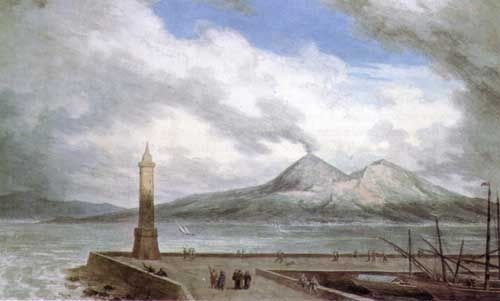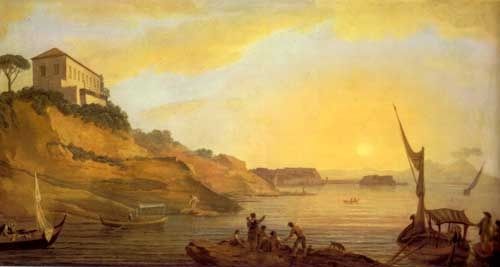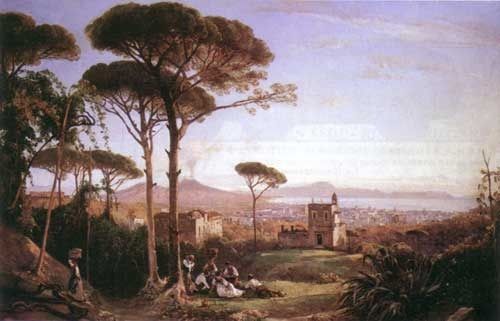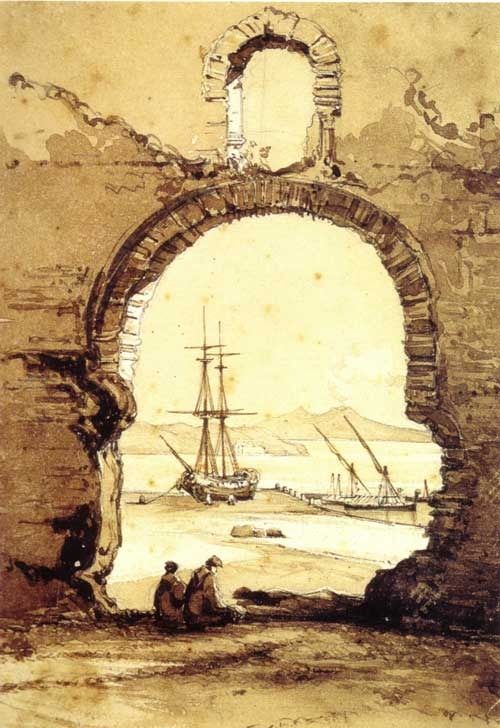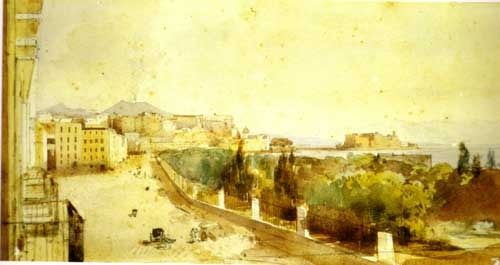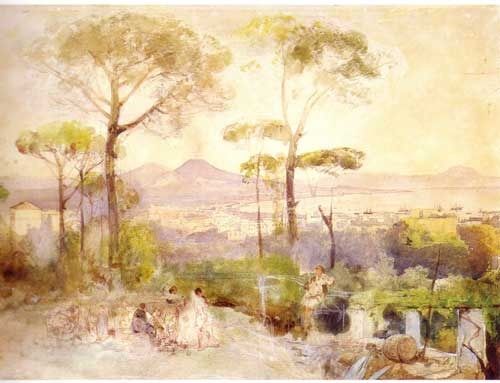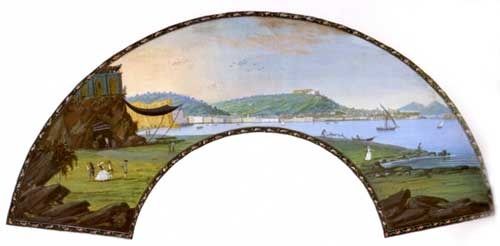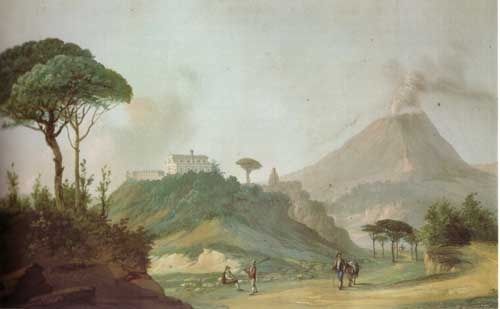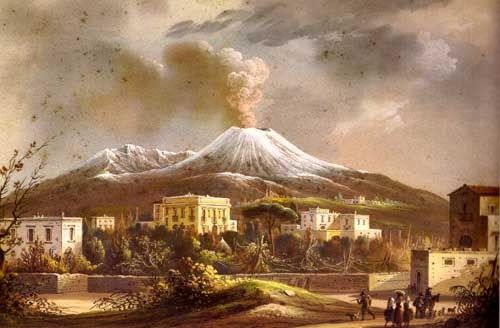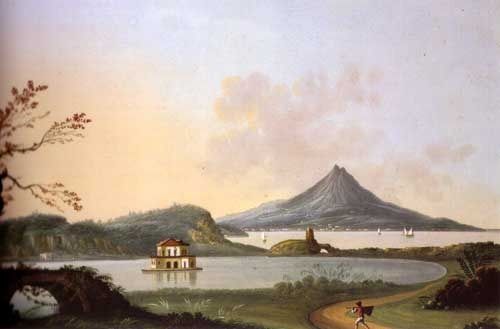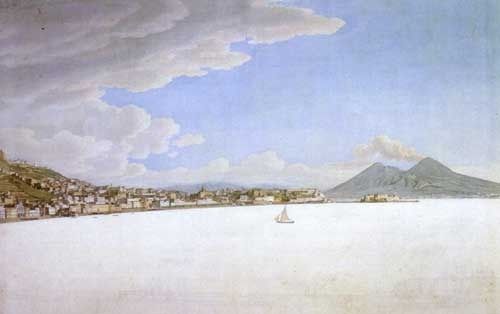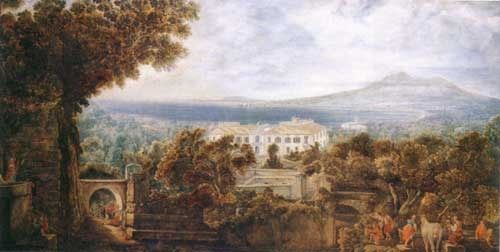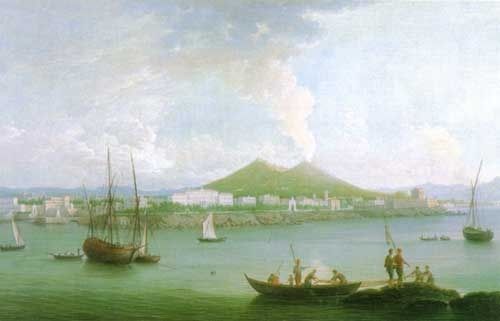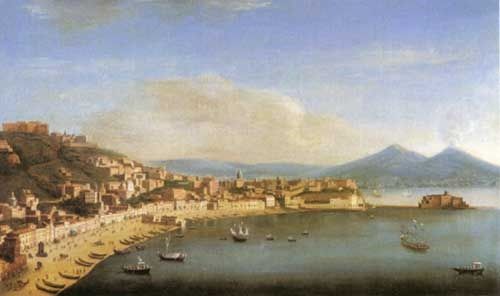

For centuries, Mount Vesuvius has fascinated painters, watercolourists and engravers from across Europe.
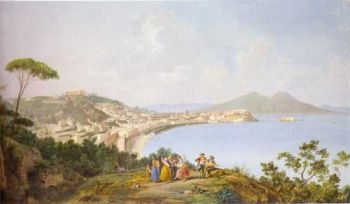
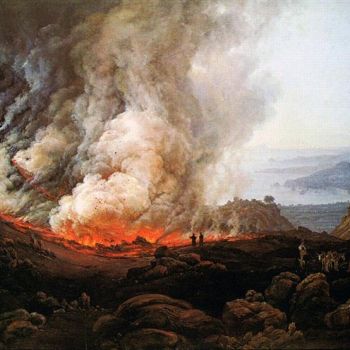
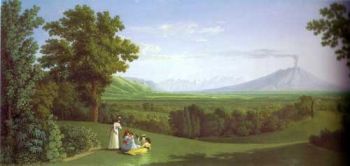
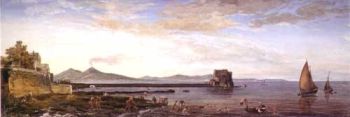
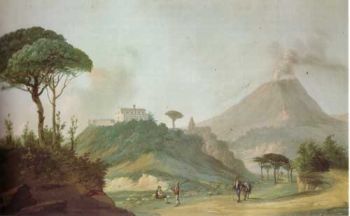
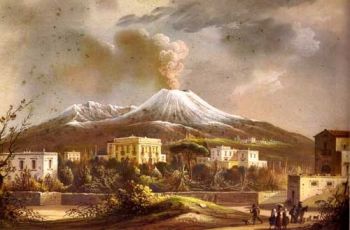
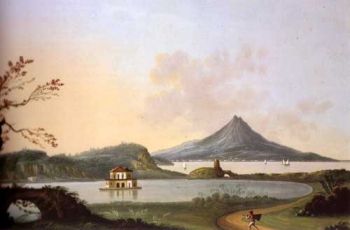
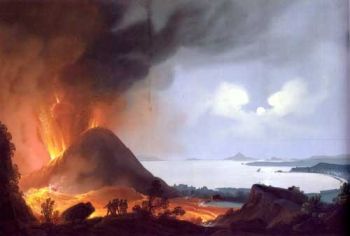
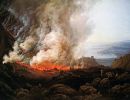
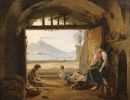
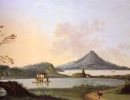
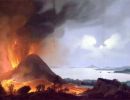
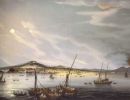
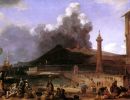
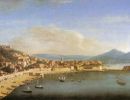
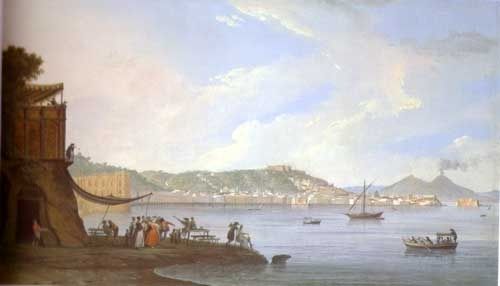
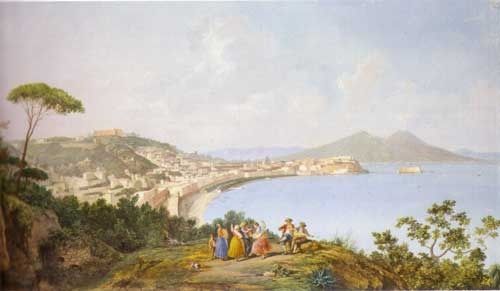
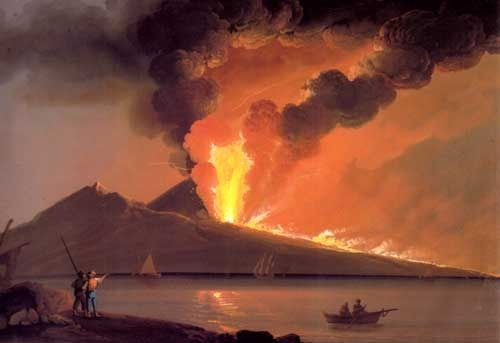
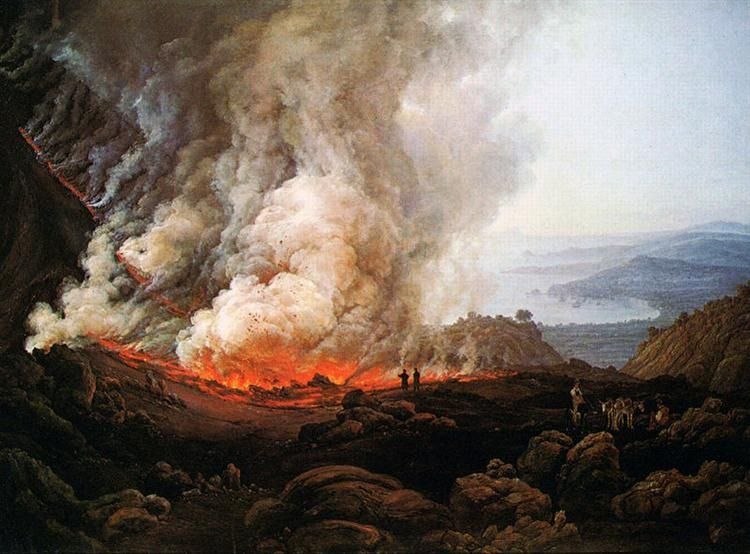
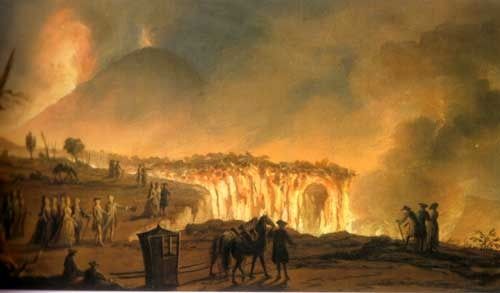
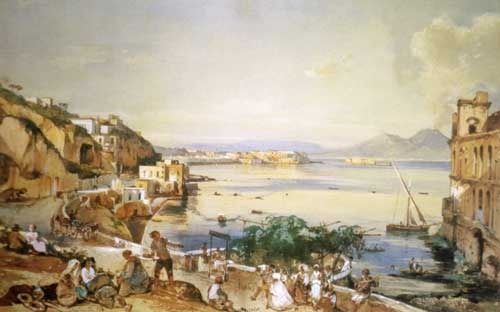
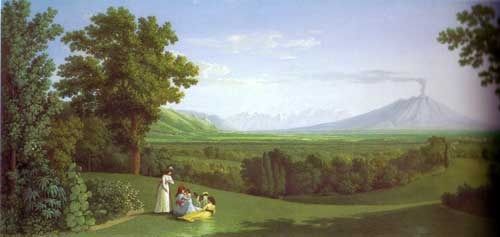
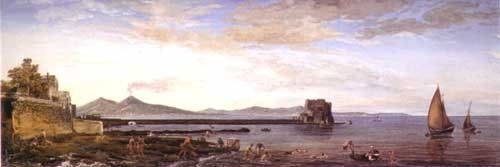
Between the seventeenth and nineteenth centuries, artists portrayed the volcano from Naples, Posillipo, Portici and the surrounding countryside, sometimes as a quiet presence on the horizon and sometimes during spectacular eruptions.
These works are much more than historical landscapes. They show how generations of artists interpreted the relationship between Vesuvius, Naples, the Bay and the people who lived beneath the volcano.
Vesuvius and the Grand Tour
During the eighteenth century, Naples became one of the most important destinations of the Grand Tour.
Travellers came from across Europe to discover classical antiquity, visit the recently excavated cities of Pompeii and Herculaneum and experience one of the most famous active volcanoes in the world.
An ascent of Mount Vesuvius became an essential part of the journey.
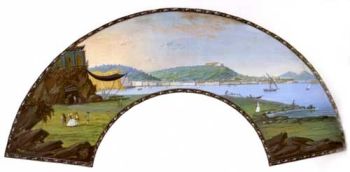
At the same time, paintings and engravings of the volcano became highly desirable souvenirs.
Artists responded by producing views of:
-
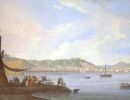
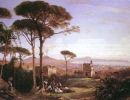
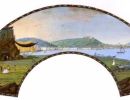
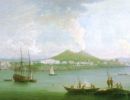
the Bay of Naples with Vesuvius in the background;
-
the volcano seen from Portici and Posillipo;
-
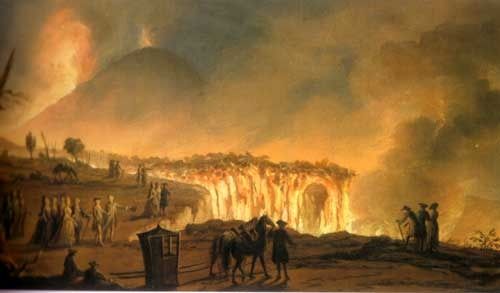
travellers approaching the crater;
-
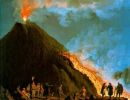
lava flows;
-
nocturnal eruptions;
-
the glow of volcanic fire reflected on the sea.
The image of Vesuvius gradually became one of the most recognizable symbols of Naples.
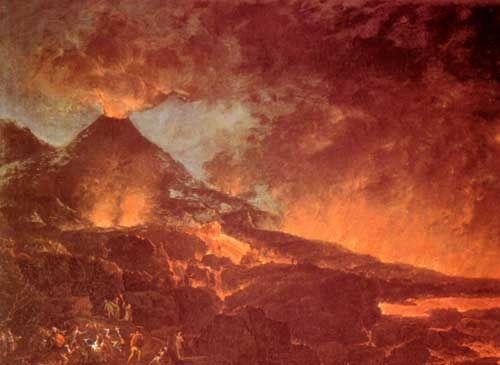
Carlo Bonavia
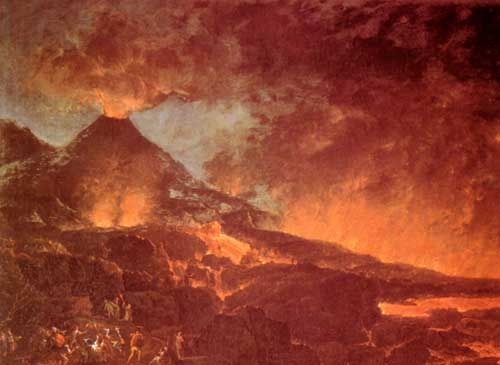
Carlo Bonavia was active in Naples during the eighteenth century and produced dramatic landscapes inspired by the Neapolitan environment.
His representations of Vesuvius combine carefully observed landscape with the spectacular effects of volcanic activity.
Among the works represented in this gallery are views of eruptions seen from the slopes of the volcano and from the waterfront of Naples.
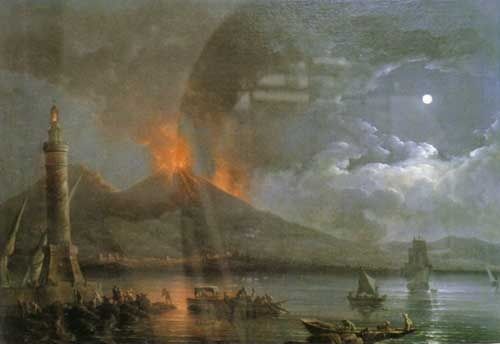
Pierre-Jacques Volaire
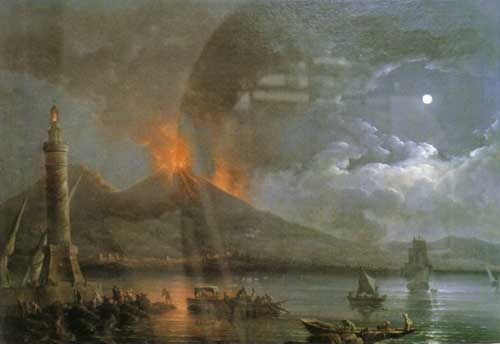
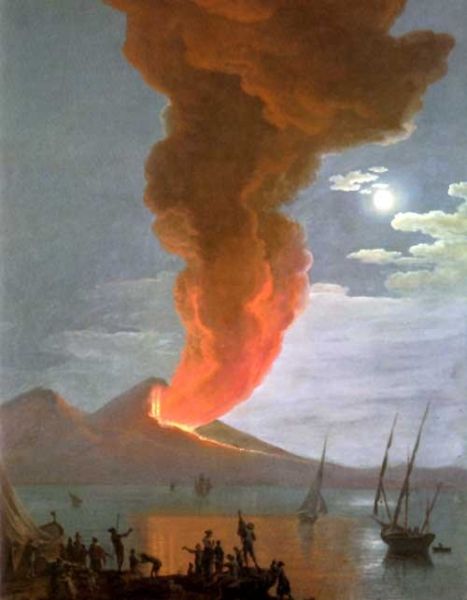
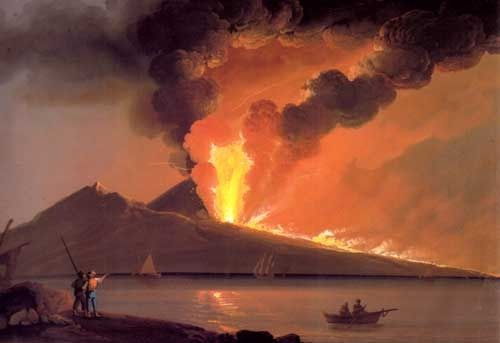
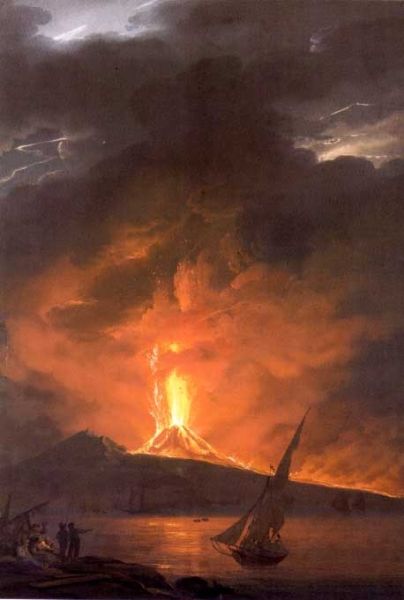
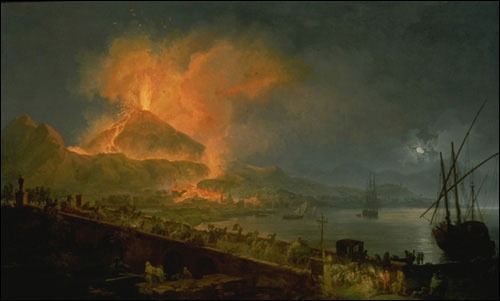
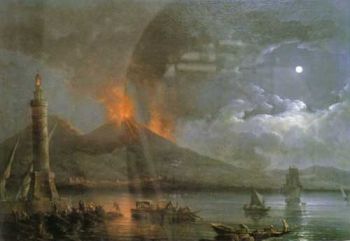
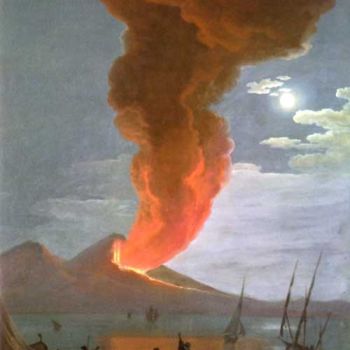
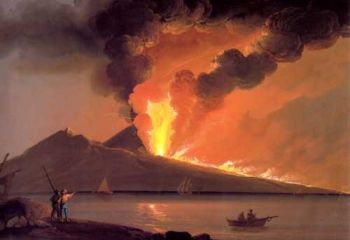
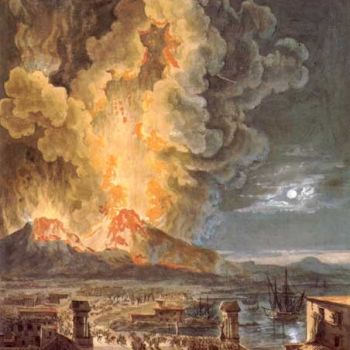
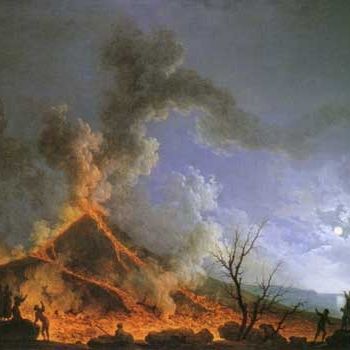
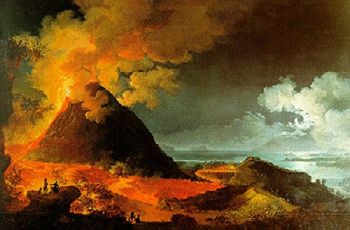
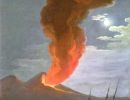
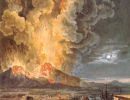
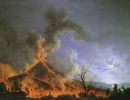
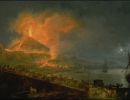
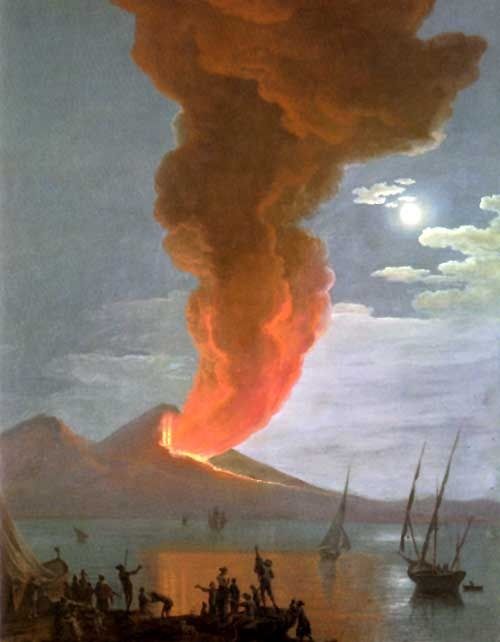
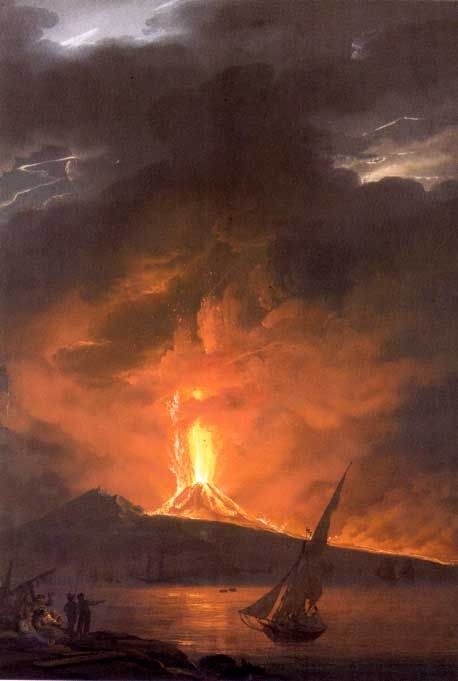
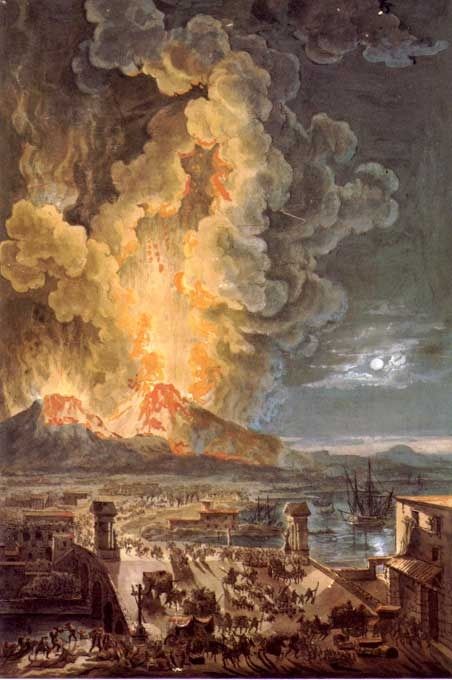
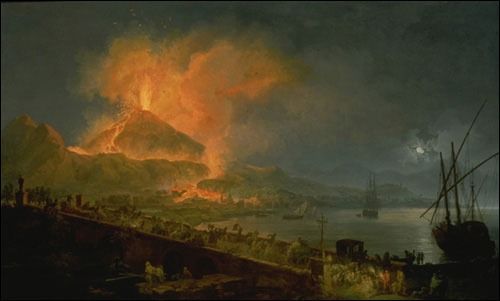
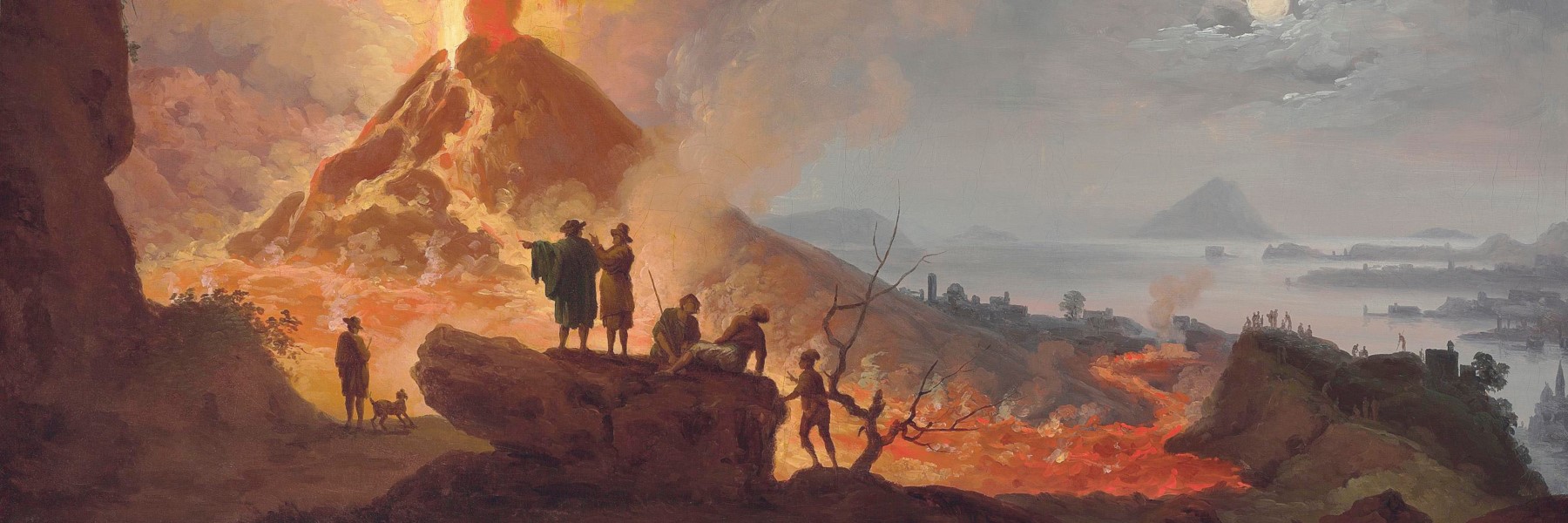
The French painter Pierre-Jacques Volaire became one of the artists most closely associated with Mount Vesuvius.
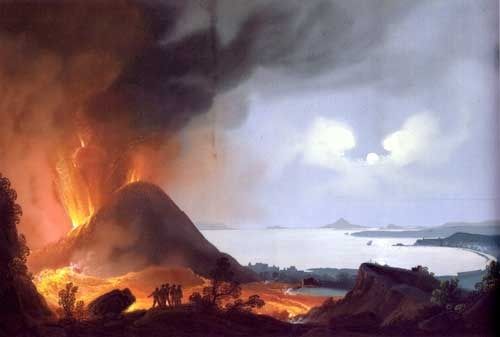
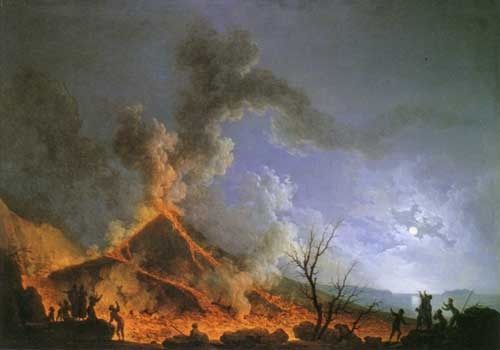
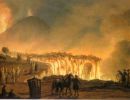
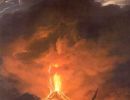
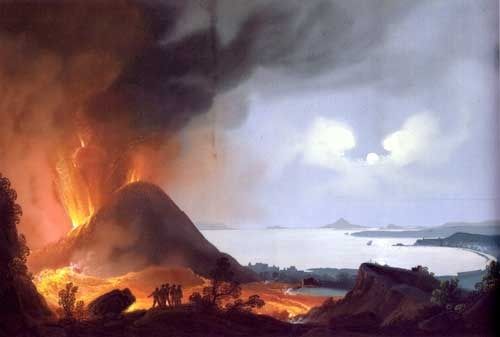
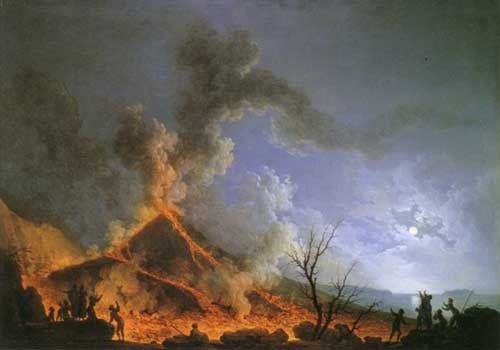
After moving to Naples, he specialized in dramatic nocturnal views of the volcano.
His paintings frequently show:
-
glowing lava;
-
dark skies;
-
smoke and ash;
-
moonlight;
-
spectators observing the eruption.
The contrast between darkness and volcanic fire made his paintings especially dramatic.
Volaire's images were highly popular among Grand Tour travellers and helped spread the image of an erupting Vesuvius throughout Europe.
Pietro Fabris
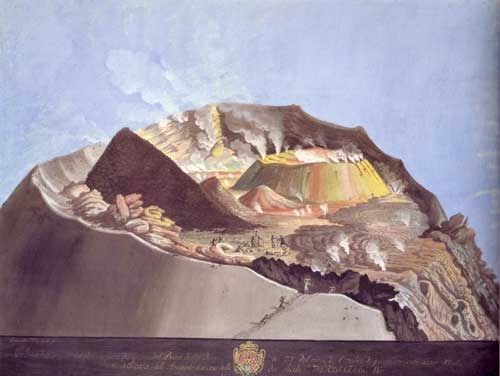
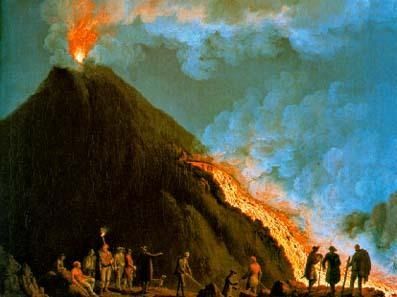
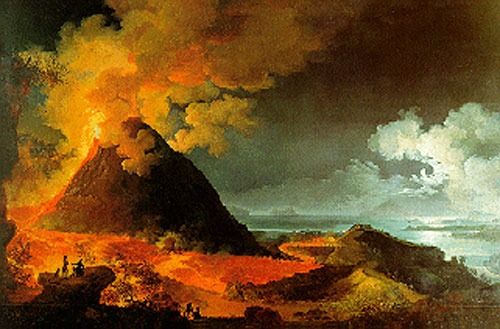
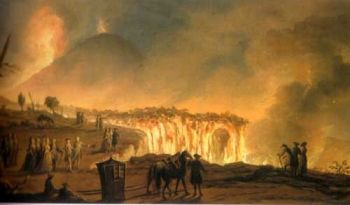
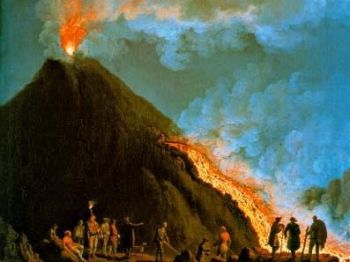
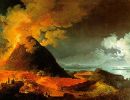
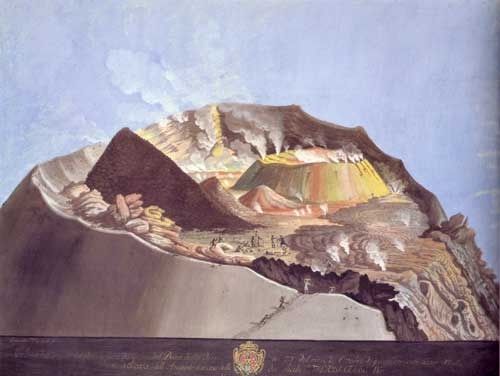
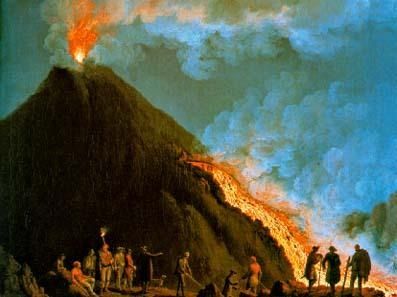
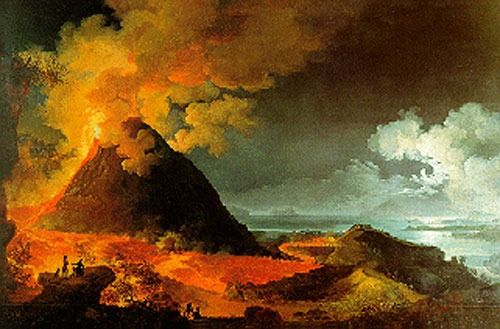
Pietro Fabris documented several episodes of volcanic activity during the eighteenth century.
His paintings and illustrations are particularly interesting because they combine artistic interpretation with careful observation.
His images of lava flows, volcanic terrain and visitors near Vesuvius also reflect the growing scientific interest in the volcano during this period.
Jacob Philipp Hackert
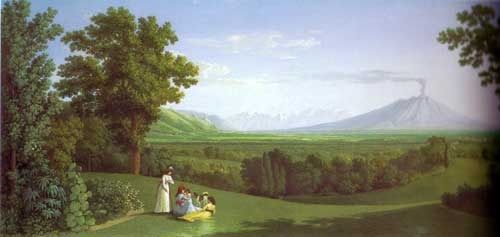
The German painter Jacob Philipp Hackert spent many years in Italy and became court painter to Ferdinand IV of Naples.
He produced numerous views of the landscapes of southern Italy, including Mount Vesuvius.
In his paintings, volcanic activity is often integrated into a broader landscape populated by travellers, fishermen and local inhabitants.
His famous representations of the 1774 eruption combine documentary observation with the dramatic character expected from a Grand Tour landscape.
Joseph Wright of Derby
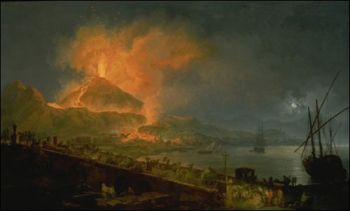
The British painter Joseph Wright of Derby visited Naples in 1774 and became fascinated by Vesuvius.
His paintings transform the volcano into an extraordinary experiment with light.
In works such as Vesuvius from Portici, the brilliant volcanic glow illuminates the dark landscape while buildings and human figures appear almost insignificant beneath the power of nature.
These paintings are among the most famous artistic expressions of the eighteenth-century concept of the sublime.
John Robert Cozens
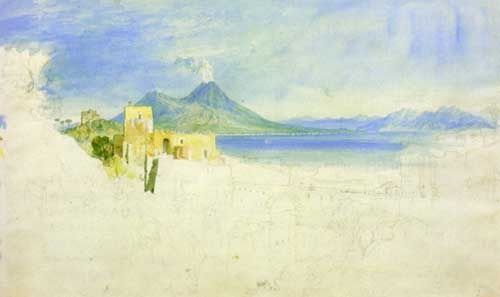
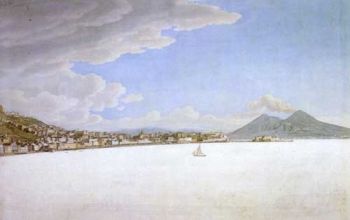
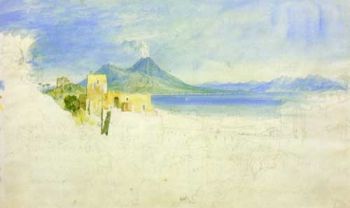
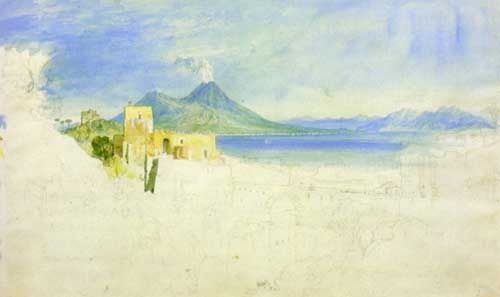
The English watercolourist John Robert Cozens travelled through Italy and produced atmospheric views of Naples and Vesuvius.
Rather than concentrating exclusively on violent eruptions, Cozens often used the volcano as a powerful element within a wider landscape.
His delicate treatment of light and atmosphere anticipated important developments in British Romantic landscape painting.
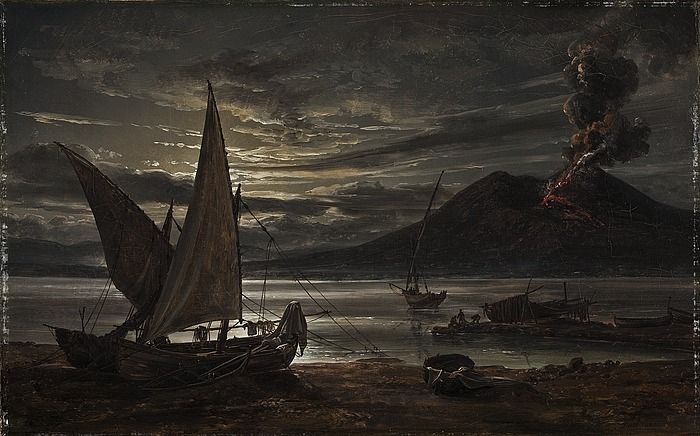
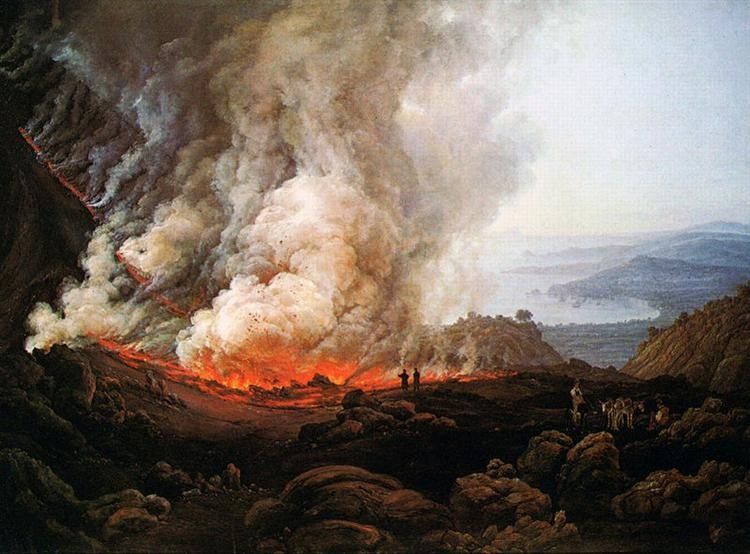
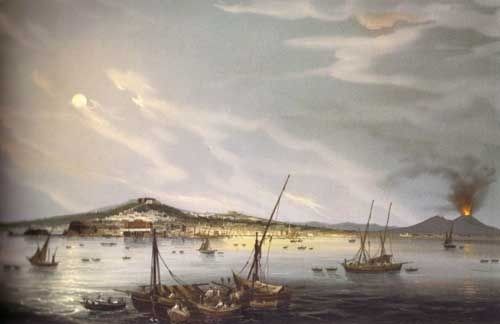
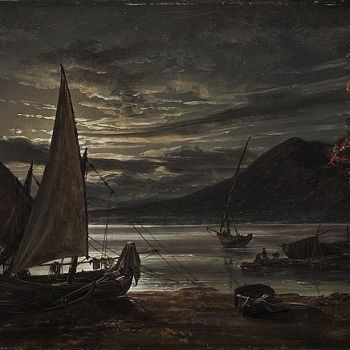
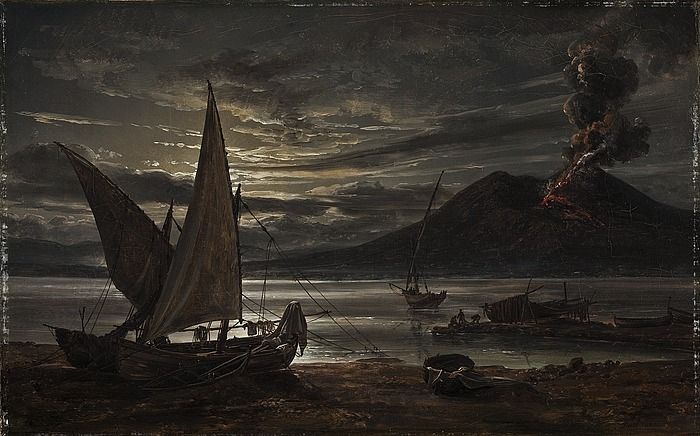
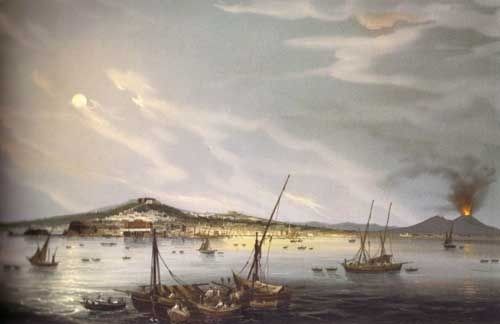
Johan Christian Dahl
The Norwegian painter Johan Christian Dahl visited Naples during the early nineteenth century.
Vesuvius became one of his favourite Italian subjects.
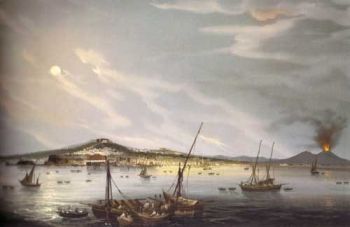
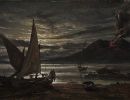
His moonlit views combine:
-
the calm waters of the Bay of Naples;
-
the pale light of the moon;
-
the distant glow of an eruption.
The contrast between the peaceful landscape and the active volcano creates an unmistakably Romantic atmosphere.
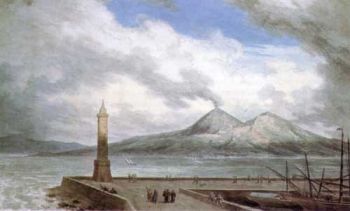
J.M.W. Turner
Joseph Mallord William Turner was fascinated by Italian landscape, light and atmosphere.
Vesuvius appears in drawings and works connected with his travels in Italy, including views from the Naples and Posillipo area.
For Turner, the volcano was part of a broader landscape of sea, mountains, light and colour rather than simply a geological phenomenon.
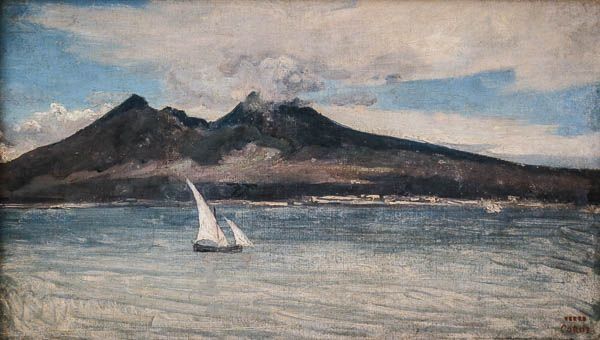
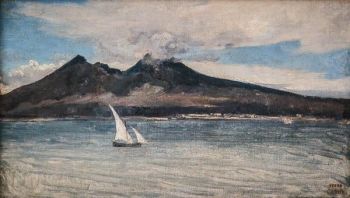
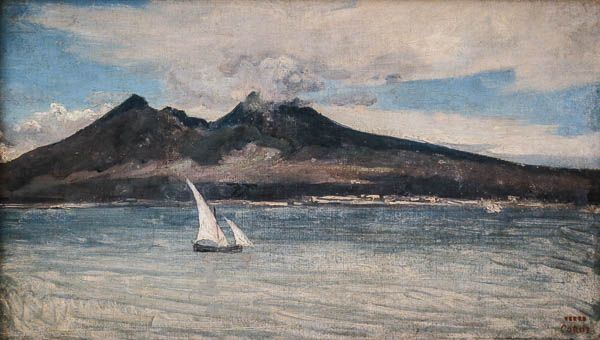
Camille Corot
The French painter Jean-Baptiste-Camille Corot visited Italy several times during the nineteenth century.
His views of the Naples area show a different interpretation of Vesuvius.
Instead of concentrating on spectacular eruptions, Corot often treated the volcano as part of the natural landscape, exploring the relationship between atmosphere, light and distance.
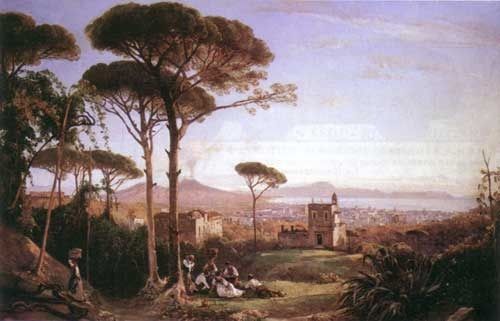
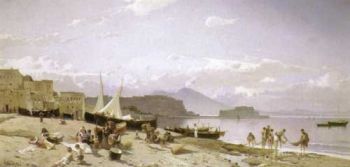
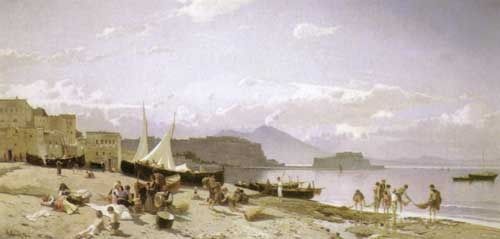
The School of Posillipo
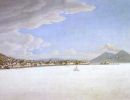
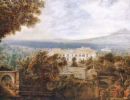
During the nineteenth century a distinctive school of landscape painting developed in Naples.
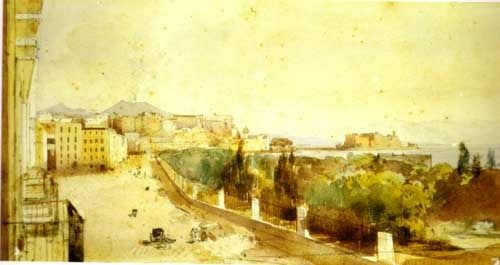
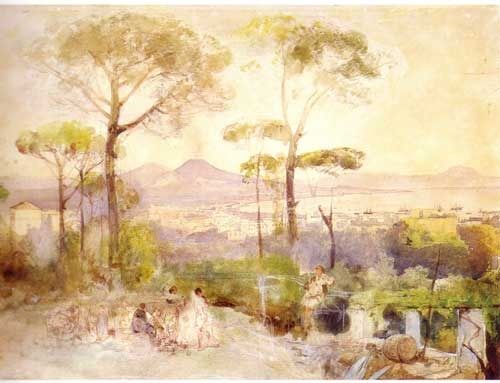
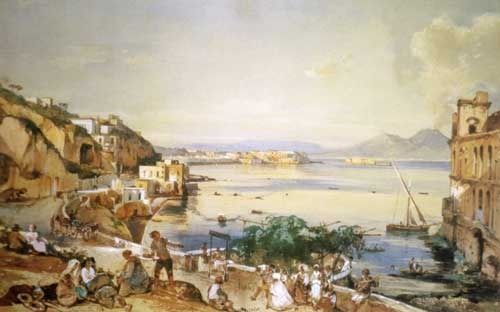
Artists associated with the School of Posillipo, including Anton Sminck van Pitloo and Giacinto Gigante, abandoned many of the conventions of traditional landscape painting and worked increasingly from direct observation.
Vesuvius frequently appears in their views of:
-
Naples;
-
Posillipo;
-
the Bay;
-
the surrounding countryside.
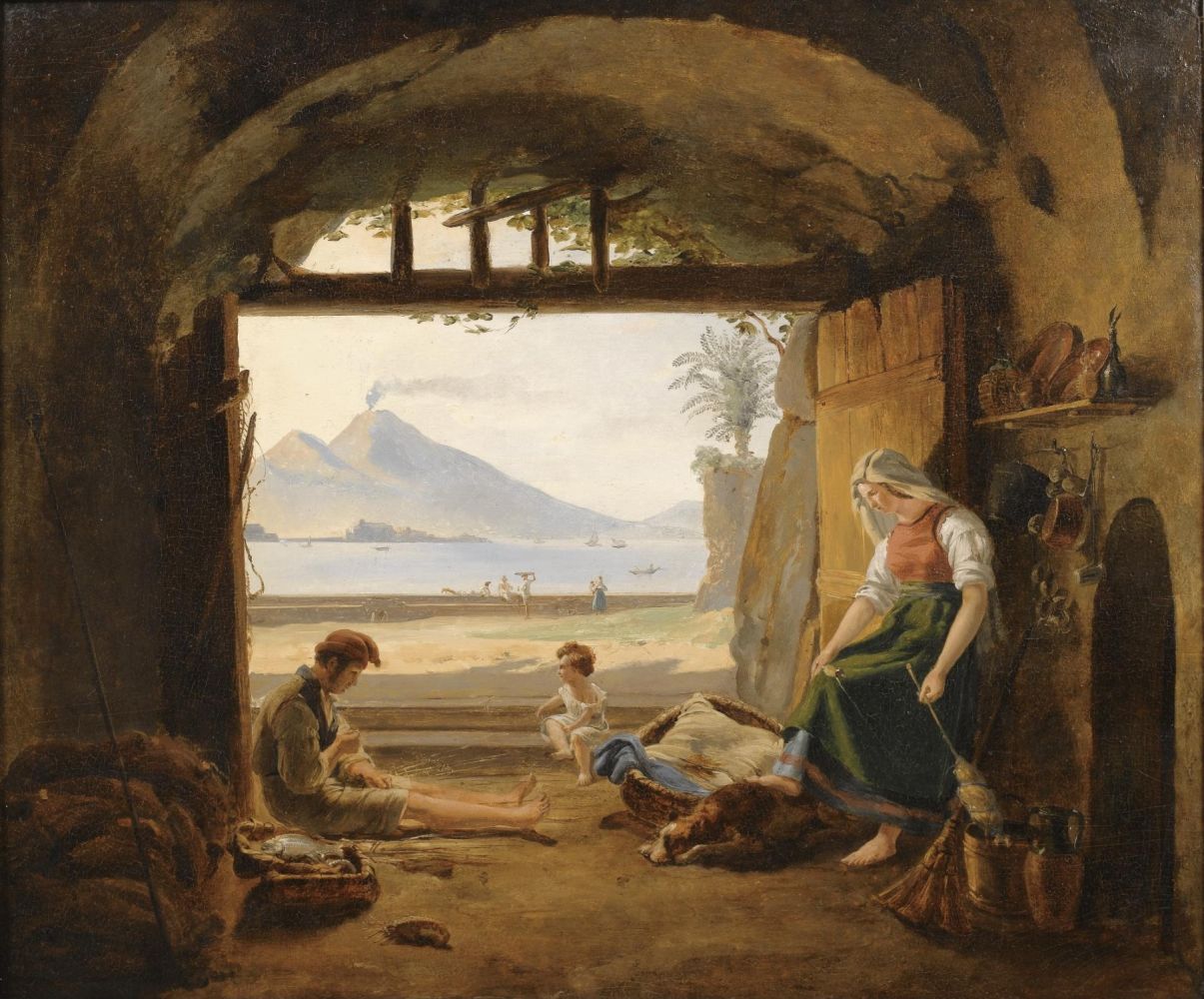
The volcano no longer needed to be shown erupting.
Its silhouette alone had become enough to identify the Neapolitan landscape.
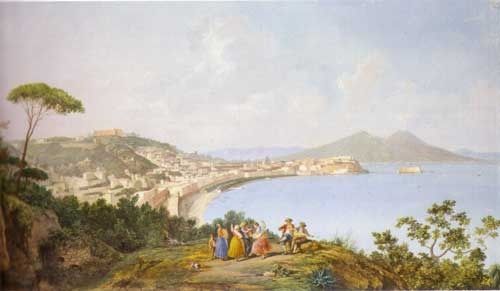
Giacinto Gigante
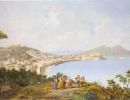
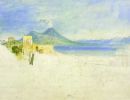
Giacinto Gigante became one of the most important representatives of nineteenth-century Neapolitan landscape painting.
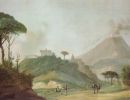
In his works, Vesuvius often appears in the distance beyond Naples or the Bay.
Rather than dominating the scene through volcanic violence, the mountain becomes part of everyday life and the visual identity of the city.
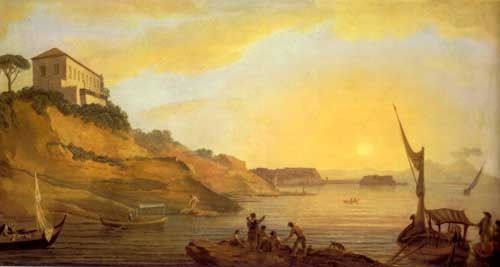
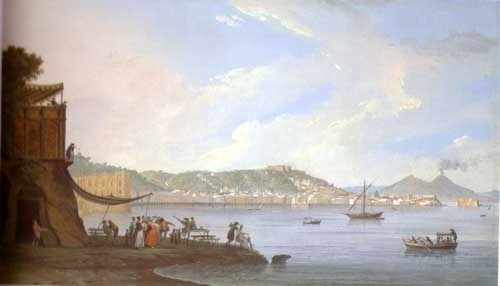
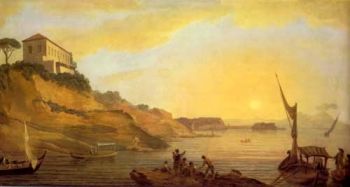
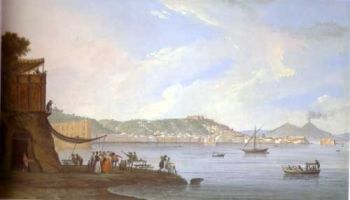
Saverio Della Gatta
Saverio Della Gatta produced numerous views of Naples and the Vesuvian landscape.
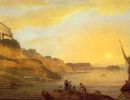
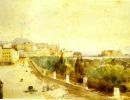
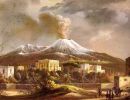
His works include representations of the dramatic 1794 eruption, as well as quieter views of Naples from different locations around the Bay.
Together, these paintings show the two faces of Vesuvius: a potentially destructive volcano and a permanent element of an extraordinarily beautiful landscape.
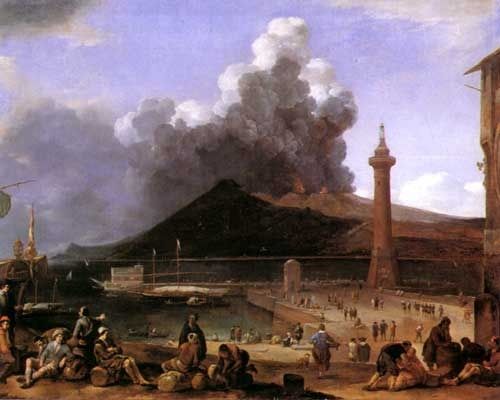
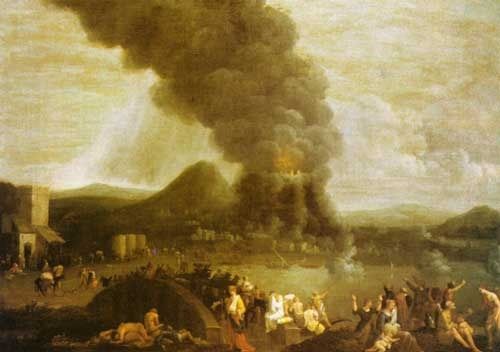
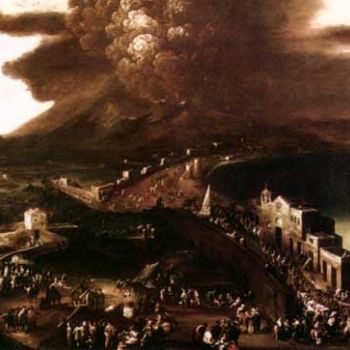
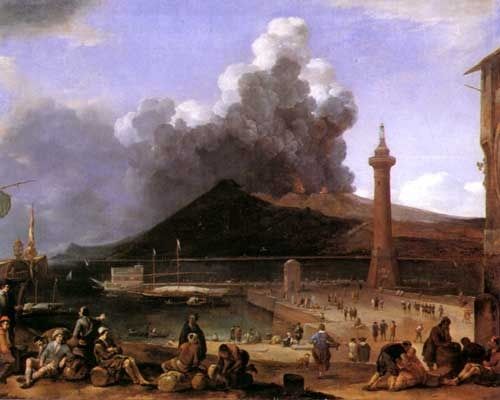
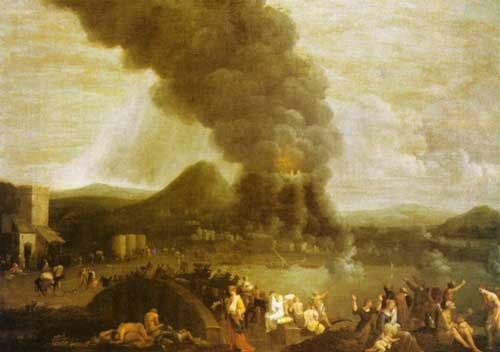
The eruption of 1631
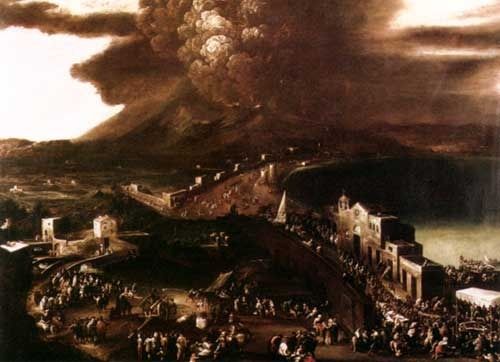
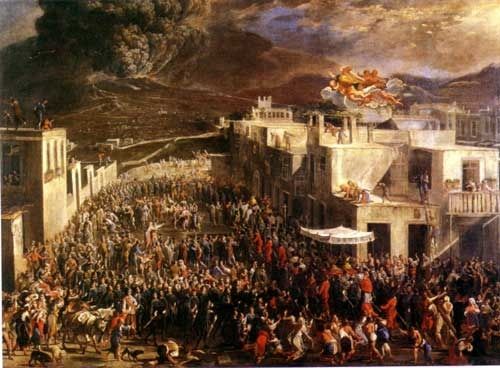
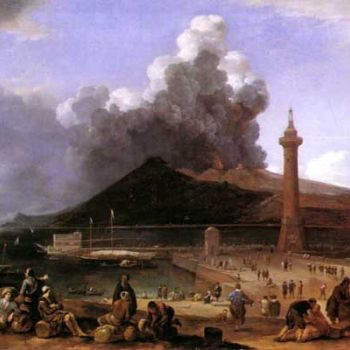
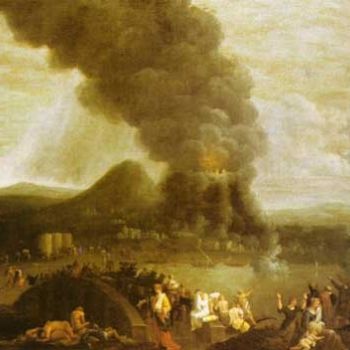
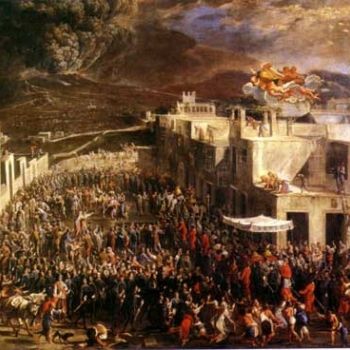
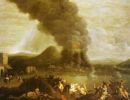
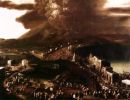
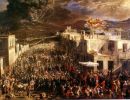
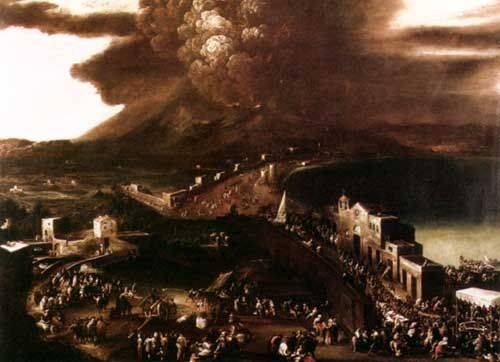
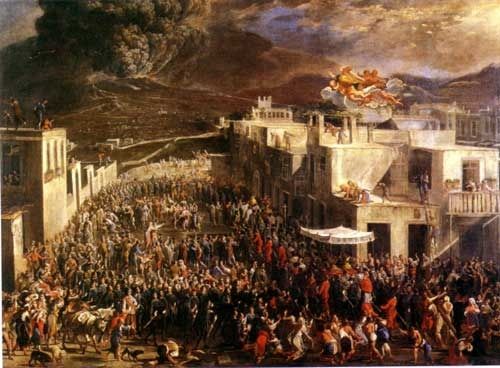
Some of the earliest works in this gallery document the devastating eruption of 1631.
Artists including Scipione Compagno and Domenico Gargiulo, known as Micco Spadaro, represented not only the eruption itself but also religious processions organized in Naples.
These paintings provide important evidence of how seventeenth-century society interpreted natural disasters through a combination of observation, fear and religious belief.
A Landscape Between Beauty and Danger
Artists repeatedly returned to Vesuvius because the volcano offered an extraordinary combination of opposites:
-
beauty and destruction;
-
light and darkness;
-
fertility and volcanic devastation;
-
everyday life and natural catastrophe;
-
scientific curiosity and emotional fascination.
This combination made Vesuvius one of the ideal landscapes of the picturesque, the sublime and Romanticism.
Artists Represented in the Gallery
The historical collection on this page includes works by artists such as:
-
Carlo Bonavia;
-
Jean-Baptiste-Camille Corot;
-
Hermann David Salomon Corrodi;
-
John Robert Cozens;
-
Johan Christian Dahl;
-
Saverio Della Gatta;
-
Camillo De Vito;
-
Pietro Fabris;
-
Franz Ludwig Catel;
-
Giacinto Gigante;
-
Jacob Philipp Hackert;
-
Jean-Pierre-Louis-Laurent Houël;
-
Gioacchino La Pira;
-
Johannes Lingelbach;
-
Giovan Battista Lusieri;
-
Abraham-Louis-Rodolphe Ducros;
-
Gabriele Ricciardelli;
-
Scipione Compagno;
-
Micco Spadaro;
-
Pierre-Jacques Volaire;
-
J.M.W. Turner;
-
and several unidentified artists whose works preserve valuable historical views of Vesuvius.
Together they show how the image of the volcano evolved over more than two centuries.
From Historical Painting to Contemporary Art
Modern artists continue to reinterpret the same volcano through completely different visual languages.
Compare these historic paintings with the contemporary works in the Vesuvionline collection:
Mount Vesuvius Seen by Contemporary Artists
For a broader introduction to the relationship between Vesuvius, the Grand Tour, Romanticism and modern art:
Mount Vesuvius in Art: From the Grand Tour to Andy Warhol